📑 In this guide
- 1. What is Arya Samaj Marriage?
- 2. Arya Samaj Marriage: Process and Procedure
- 3. Eligibility Criteria for Arya Samaj Marriage
- 4. Documents Required for Arya Samaj Marriage in Delhi
- 5. Legal Validity of Arya Samaj Marriage
- 6. Why Register Your Arya Samaj Marriage?
- 7. Arya Samaj Marriage vs. Court Marriage (Special Marriage Act)
- 8. Fees for Arya Samaj Marriage
- 9. Conclusion
Arya Samaj Marriage in Delhi: Complete Process, Documents & Legal Validity (2026 Guide)
Arya Samaj marriage offers a traditional yet legally recognized path for couples, particularly those from Hindu, Sikh, Jain, and Buddhist communities, who wish to solemnize their union through Vedic rituals. Governed by the Arya Marriage Validation Act, 1937, and the Hindu Marriage Act, 1955, this form of marriage is both spiritually meaningful and legally valid.
Based at Tis Hazari Courts, Delhi, our practice with over 30 years of experience, led by Advocate Ashok Arora and Advocate Anita Arora, provides comprehensive legal assistance for Arya Samaj marriages, ensuring a smooth process from the Vedic ceremony to obtaining your official marriage certificate.
This guide provides a complete overview of the Arya Samaj marriage process, required documents, legal validity, and how to ensure your marriage is fully recognized by the law.
What is Arya Samaj Marriage?
Arya Samaj marriage is a marriage ceremony performed according to Vedic rituals and traditions. Founded by Swami Dayanand Saraswati, the Arya Samaj movement promotes equality and simplicity, rejecting caste distinctions and elaborate, often expensive, wedding ceremonies. An Arya Samaj marriage is simple, sacred, and conducted by a certified priest (Pundit) from the Arya Samaj Mandir.
Key Features of an Arya Samaj Marriage
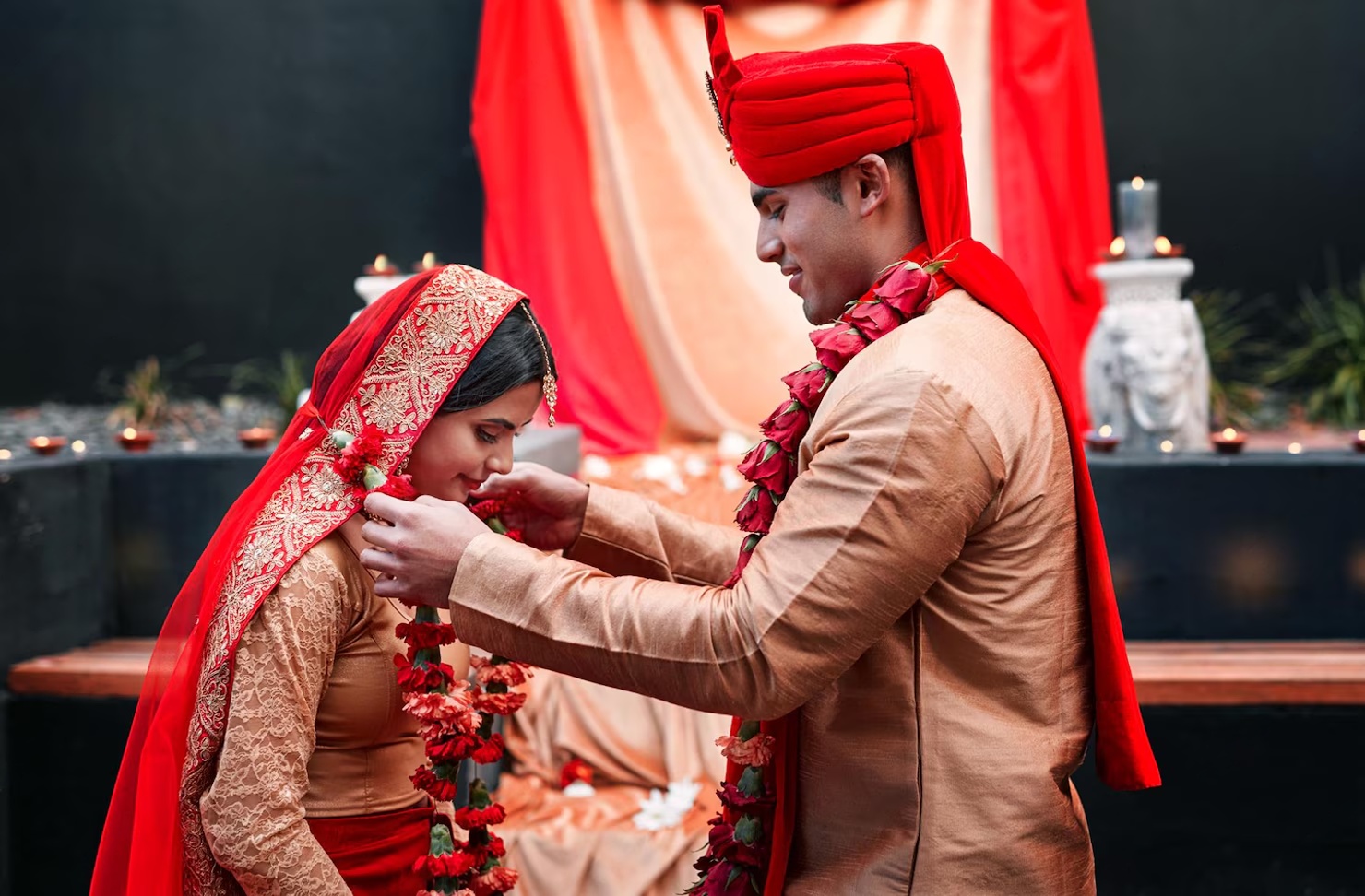
- Vedic Rituals: The ceremony involves Vedic rites like Kanyadan, Panigrahan, Saptapadi (the seven steps), and the chanting of Vedic mantras, which are often explained to the couple in Hindi or English.
- No Idol Worship: Arya Samaj Mandirs typically do not have statues of gods and goddesses. The focus is on the sacred fire (Havan) and Vedic hymns.
- Promotes Equality: The Arya Samaj tradition supports inter-caste and inter-faith marriages, promoting social harmony. Non-Hindus can also marry after a simple purification ceremony (Shuddhi).
Arya Samaj Marriage: Process and Procedure
The process for an Arya Samaj marriage in Delhi is straightforward, and many mandirs are open seven days a week to accommodate couples. Here is a step-by-step breakdown:
Step 1: Document Preparation
The first and most crucial step is gathering all necessary documents as per the checklist provided below. A dedicated legal team can assist with this to avoid any delays due to incorrect or missing paperwork.
Step 2: Visit the Arya Samaj Mandir
Visit any Arya Samaj Mandir in Delhi. It is recommended to choose a reputable mandir with a history of conducting legal and valid ceremonies. Note that services are often available seven days a week, including Sundays, from morning until evening.
Step 3: Document Verification
The Mandir's team will verify all documents to ensure the couple meets the eligibility criteria. This is a critical step to ensure the ceremony is legally compliant.
Step 4: The Marriage Ceremony
A certified Pundit from the Arya Samaj Mandir will conduct the marriage ceremony following traditional Vedic customs. This usually includes a Havan (sacred fire ritual) and the chanting of mantras. The ceremony is typically completed within a few hours.
Step 5: Issuance of Arya Samaj Marriage Certificate
Upon completion of the ceremony, the Arya Samaj Mandir will issue a marriage certificate. This certificate serves as proof that the marriage has been solemnized according to Vedic rites and customs.
Step 6: Official Registration with the Government
This is the most crucial step for legal validity. The Arya Samaj marriage certificate must be presented to the Marriage Registrar Office (typically the office of the Sub-Divisional Magistrate - SDM) to register the marriage officially. This can be done under:
- The Hindu Marriage Act, 1955: If both parties belong to the Hindu religion (including Sikhs, Jains, and Buddhists).
- The Special Marriage Act, 1954: If the couple is of different religions (inter-faith marriage).
Eligibility Criteria for Arya Samaj Marriage
To have a valid Arya Samaj marriage, both parties must meet the following conditions:
- Age: The groom must be at least 21 years old, and the bride must be at least 18 years old at the time of marriage.
- Mental Capacity: Both parties must be of sound mind and capable of giving free consent.
- No Prohibited Relationship: The parties must not be within the degrees of prohibited relationship as defined by their customs or the Act.
- No Subsisting Marriage: Neither party should have a living spouse at the time of marriage. If divorced, a divorce decree is required; if widowed, a death certificate of the previous spouse is required.
- Religion: The ceremony is generally for Hindus, Sikhs, Jains, and Buddhists. Inter-caste marriages within these communities are permissible. For inter-faith marriages, a conversion ceremony (Shuddhi) is often required for the non-Hindu partner, followed by court registration under the Special Marriage Act.
Documents Required for Arya Samaj Marriage in Delhi
Ensuring you have the complete and correct set of documents is essential for a smooth process. Here is a detailed checklist:
For Bride and Groom
- Proof of Age (Any one):
- Matriculation Certificate (Class 10th)
- Passport
- Driving License
- PAN Card
- Birth Certificate issued by MCD or another recognized government office
- Voter ID Card
- Ration Card
- Proof of Address (Any one):
- Voter ID Card
- Ration Card
- Driving License
- Bank Passbook
- Telephone or Electricity Bill
- Domicile Certificate issued by a government office
- Rent Agreement (with notarization)
- Note: PAN cards are not accepted as proof of address.
- Photographs: Six passport-size photographs of both the bride and groom. (Some sources mention eight photos for Muslims and Christians).
- Affidavits: One sworn affidavit from the boy and one from the girl, typically on a stamp paper, declaring:
- Date of birth and age.
- Marital status (unmarried, divorced, or widowed).
- Citizenship.
- That the parties are not within a prohibited relationship.
- That the consent is free and voluntary.
Documents of Witnesses
- Two witnesses are required for an Arya Samaj marriage.
- Each witness must provide a valid ID proof (Voter ID, Driving License, Passport, etc.) and one photograph.
Additional Items for the Ceremony
- Mangal Sutra
- Two Jaimala (garlands)
- Fresh Flowers
- Sweets (approx. 2 kg)
- Three types of fruits (approx. 1 kg each)
Additional Documents for Special Cases
- For Widows/Widowers: Death certificate of the deceased spouse.
- For Divorcees: Certified copy of the divorce decree from the competent court.
Legal Validity of Arya Samaj Marriage
The legal status of an Arya Samaj marriage hinges on two critical factors: the performance of proper Vedic rites and its subsequent registration with the government.
1. The Ceremony as the Foundation of Validity
Multiple High Court judgments, including a recent ruling by the Allahabad High Court (April 2025), have confirmed that a marriage solemnized in an Arya Samaj Mandir following the Vedic procedure is a valid marriage under the Hindu Marriage Act, 1955.
The court emphasized that for a marriage to be valid under Section 7 of the Hindu Marriage Act, the essential ceremonies like Saptapadi (seven steps) must be performed. If these Vedic rites are conducted, the marriage is considered valid, irrespective of the place of solemnization. Conversely, if the Vedic rites are not performed, the marriage is a nullity, and the Arya Samaj certificate alone holds no legal value.
2. The Crucial Role of Registration
While the ceremony is the foundation of a valid marriage, registration is the key to its legal proof and official recognition.
- The Supreme Court's Stance: The Supreme Court of India has clearly stated that the Arya Samaj "has no business issuing marriage certificates" and that this is the work of the statutory authorities. An Arya Samaj marriage certificate is not a substitute for official registration.
- Purpose of Registration: An Arya Samaj marriage can be registered under the Hindu Marriage Act, 1955, or the Special Marriage Act, 1954. This official registration provides you with a legally recognized marriage certificate from the government, which is essential for:
- Visa and passport applications
- Adding a spouse's name to official documents
- Claiming insurance and bank benefits
- Legal proof in case of disputes
- Is Registration Mandatory? While the non-registration of a marriage does not automatically invalidate the marriage itself, the Supreme Court has mandated compulsory registration of marriages in all states. Registration ensures legal certainty and protects the rights of both parties, especially the wife.
3. The Difference Between the Two Documents
| Feature | Arya Samaj Marriage Certificate | Government Marriage Certificate |
|---|---|---|
| Issuing Authority | Arya Samaj Mandir / Trust | Sub-Divisional Magistrate (SDM) / Registrar |
| Legal Status | Proof of ceremony performed | Official and statutory proof of marriage |
| Evidentiary Value | Limited; not a standalone valid proof of marriage | Highest evidentiary value for all legal purposes |
| Requirement | Not mandatory for registration but is a prerequisite | Mandatory for establishing legal rights and privileges |
Why Register Your Arya Samaj Marriage?
Registering your Arya Samaj marriage with the government is not just a formality; it is a crucial step for your future security. As highlighted by legal experts, registration is essential for official purposes, ensuring the marriage is recognized by the government and preventing disputes in the future. A registered marriage protects both parties from denial of the marital status and clarifies legal rights and obligations.
Arya Samaj Marriage vs. Court Marriage (Special Marriage Act)
Arya Samaj Marriage:
- Ceremony: Religious, Vedic rites and customs are performed.
- Religion: Primarily for Hindus, Sikhs, Jains, and Buddhists. Inter-caste is allowed; inter-faith may require conversion.
- Time: The ceremony itself takes a few hours. Registration can be completed later.
- Certificate: An Arya Samaj certificate is issued, but official registration is a must.
Court Marriage (Special Marriage Act):
- Ceremony: Secular, no religious rituals required.
- Religion: Open to any couple, irrespective of religion or caste.
- Time: Requires a mandatory 30-day notice period before solemnization.
- Certificate: A marriage certificate is issued directly by the Marriage Officer, which is the official legal proof.
Fees for Arya Samaj Marriage
The cost of an Arya Samaj marriage is generally affordable. The fees cover the ceremony and the Arya Samaj certificate. The government registration fee for registering the marriage is nominal, typically around ₹100-₹200. A lawyer or legal firm may charge additional fees if they assist with the documentation and registration process.
Conclusion
An Arya Samaj marriage in Delhi is a beautiful and legally valid way for couples to tie the knot, blending spiritual tradition with legal recognition. The recent Allahabad High Court judgment has reinforced that a marriage performed with Vedic rites in an Arya Samaj Mandir is a valid marriage under the Hindu Marriage Act.
However, the crucial takeaway is that the Arya Samaj marriage certificate is not a substitute for official government registration. To ensure your marriage is fully recognized and your rights are protected, it is imperative to register your marriage with the Marriage Registrar.
If you are planning an Arya Samaj marriage in Delhi, our team at Arora & Arora Associates, with over three decades of experience at Tis Hazari Courts, can provide expert guidance through every step. From document verification to ensuring the Vedic ceremony is conducted correctly and assisting with the crucial government registration, our dedicated advocates, led by Advocate Ashok Arora and Advocate Anita Arora, are here to make your journey smooth and legally sound.
![Same-Day Court Marriage in Delhi: Legal Process & Documents [2026]](https://i.ibb.co/nstxf9Rd/14e58fba-1819-4fe8-af7d-58961b443983.webp)